
How to Choose the Right Plastic Surgeon in Korea: An International Patient’s Guide
Read about How to Choose the Right Plastic Surgeon in Korea: An International Patient’s Guide on faceon

South Korea has solidified its reputation as a global hub for plastic surgery, attracting hundreds of thousands of international patients annually with its cutting-edge techniques and renowned expertise. The global interest in Korean aesthetics, propelled by popular culture and well-documented transformations, has made Seoul a primary destination for those seeking cosmetic enhancement. However, the sheer volume of choices, coupled with language barriers and cultural differences, can make the process challenging. For international patients, navigating this dynamic and competitive industry requires meticulous research and a discerning eye to ensure both safety and satisfaction.
This guide aims to demystify the process by providing international patients with the essential tools to make a safe and confident choice. We will equip you with practical strategies for conducting effective online research, verifying surgeon and clinic credentials, analyzing before-and-after photos, and formulating key questions for your consultation. We will cover why confirming your surgeon is board-certified by a recognized body like the Korean Society of Plastic and Reconstructive Surgeons (KSPRS) is a non-negotiable first step, and emphasize the importance of a dedicated, full-time anesthesiologist. Additionally, we will outline specific red flags, such as high-pressure sales tactics or suspiciously low prices, that should prompt caution. By understanding these crucial elements, you can approach your aesthetic journey with clarity, ensuring your focus remains on achieving your desired results safely.
Planning a procedure in Korea? This checklist highlights the critical steps for a safe and successful outcome. A successful journey hinges on diligent research into surgeon credentials, clinic safety standards, and transparent communication. Following a structured approach helps you vet clinics effectively and partner with a qualified professional who understands your goals. Medical tourism resources confirm that clinics with dedicated international support systems, including translators and post-operative care, provide a significantly better patient experience (Docfinderkorea 2024).
- Verify Surgeon Credentials: Confirm your surgeon is board-certified by the Korean Society of Plastic and Reconstructive Surgeons (KSPRS).
- Confirm Anesthesia Safety: Ensure the clinic has a full-time, board-certified anesthesiologist on staff for your specific procedure.
- Review Portfolios: Critically examine a wide range of unedited before-and-after photos that show consistent, high-quality results.
- Assess International Support: Prioritize clinics with dedicated English-speaking coordinators and comprehensive aftercare services.
- Prepare Consultation Questions: Create a list of specific questions about the surgeon’s experience, safety protocols, and potential risks.
- Identify Red Flags: Avoid clinics using high-pressure sales tactics or those unclear about who will perform the actual surgery.
Ultimately, your safety and satisfaction depend on thorough vetting, not just a clinic's marketing.
The Korean Wave in Aesthetics: Why the World Chooses Seoul
The "Korean Wave" extends far beyond K-pop and K-dramas, having established Seoul as a leading center for aesthetic surgery. This reputation is built on an industry defined by precision, innovation, and high standards of care.
South Korea's prominence in the field stems from an ecosystem of intense competition, deep specialization, and robust government support formedical tourism. With hundreds of clinics in Seoul's Gangnam district alone, surgeons perform an incredibly high volume of procedures, leading to unparalleled expertise in specific areas. This environment fosters constant innovation in both technology and technique. The scale of this industry is significant, with South Korea responsible for a substantial portion of all aesthetic surgeries performed worldwide, according to data from the International Society of Aesthetic Plastic Surgery (ISAPS 2023). This high demand from both domestic and international patients helps drive standards ever higher.
The potential cost savings for international patients are also a considerable factor.
| Procedure | Average Cost in Korea (USD) | Average Cost in USA/EU (USD) | Estimated Savings |
|---|---|---|---|
| Rhinoplasty | $3,000 - $7,000 | $8,000 - $15,000 | 50-65% |
| Double Eyelid Surgery | $1,500 - $4,000 | $4,000 - $7,000 | 40-60% |
| Facelift | $8,000 - $15,000 | $15,000 - $30,000+ | 45-75% |
| V-Line Jaw Surgery | $9,000 - $16,000 | $20,000 - $40,000+ | 50-70% |
Note: Prices are estimates and vary based on clinic, surgeon, and procedure complexity.
The convergence of advanced technology, hyper-specialized surgeons, and significant cost-effectiveness makes South Korea a compelling choice for patients worldwide.
Beginning Your Journey: How to Conduct Effective Online Research
With Seoul's reputation as a global hub for aesthetic procedures, the number of clinics can feel overwhelming. A successful experience begins not in the operating room, but with diligent and structured online research.
This foundational step is about systematically gathering and cross-referencing information to build a shortlist of clinics that are skilled and experienced in serving international patients. A methodical approach helps filter out unreliable options and focuses your attention on credible providers. Many international patients begin with government-accredited medical tourism agencies or dedicated concierge services like Face On Korea, which are designed to help vet clinics and manage logistics (Docfinderkorea 2024). Furthermore, leading clinics often display official accreditation from Korea’s Ministry of Health, signaling a commitment to high safety standards.
Here is a practical, step-by-step guide to begin your search:
- Leverage Official Resources: Start with government-approved medical tourism platforms. They often provide pre-vetted lists of clinics, offering an initial layer of security.
- Explore Patient Communities: Dive into online forums and dedicated social media groups. These platforms offer unfiltered patient reviews and firsthand accounts. Look for detailed stories rather than simple one-line comments.
- Scrutinize Clinic Websites: Visit the official websites of clinics on your list. Look for a dedicated section for international patients with services like multilingual coordinators, visa assistance, and post-operative care arrangements.
- Create Your Shortlist: Based on your research, narrow your options down to 3-5 clinics. Ensure each one specializes in your desired procedure and has a demonstrable history of achieving excellent results with international clientele.
Your diligence in the research stage is the single most important factor in ensuring a safe and positive outcome.
Beyond the Brochure: How to Verify Surgeon and Clinic Credentials
A clinic's polished website and curated photos are designed to impress, but your safety depends on credentials that exist beyond marketing materials. This step involves a meticulous check of the surgeon's qualifications and the clinic's safety infrastructure. Verifying that your surgeon is board-certified and that the clinic is equipped for any contingency is essential.
True surgical expertise is validated by rigorous training and official certification. The Korean Society of Plastic and Reconstructive Surgeons (KSPRS) is the primary official body, and its certification ensures a surgeon has completed an extensive residency program. Furthermore, the presence of a board-certified anesthesiologist is a critical safety measure. According to medical tourism resources, many smaller clinics in Seoul lack a full-time anesthesiologist, which can pose a significant risk (Docfinderkorea 2024). Reputable clinics are proud of their safety records and often highlight their zero-accident history as proof of their commitment to patient well-being.
To ensure your chosen surgeon and clinic meet the highest standards, follow these verification steps:
- Confirm Board Certification: Ask for the surgeon’s credentials and verify their membership with the KSPRS. A "plastic surgery specialist" is a protected title in Korea, reserved only for board-certified members.
- Verify Anesthesiologist Presence: Ask the clinic directly: "Will a board-certified anesthesiologist be present in the operating room for the entire duration of my surgery?" The answer must be an unequivocal "yes."
- Inquire About Safety Systems: Ask about the clinic's emergency preparedness. Do they have an uninterruptible power supply (UPS), defibrillators, and other advanced life support equipment?
- Request Specific Experience: Ask the surgeon how many times they have performed your specific procedure, particularly on patients with your ethnic background or facial structure.
Caution: Be wary of clinics that are evasive or dismissive of these questions. A reputable clinic will be transparent about its safety protocols and the qualifications of its staff.
Verifying the surgeon's board certification and the clinic's commitment to full-time anesthetic care is the most critical step you can take to protect your health.
A Picture's Worth: How to Critically Analyze Before-and-After Photos
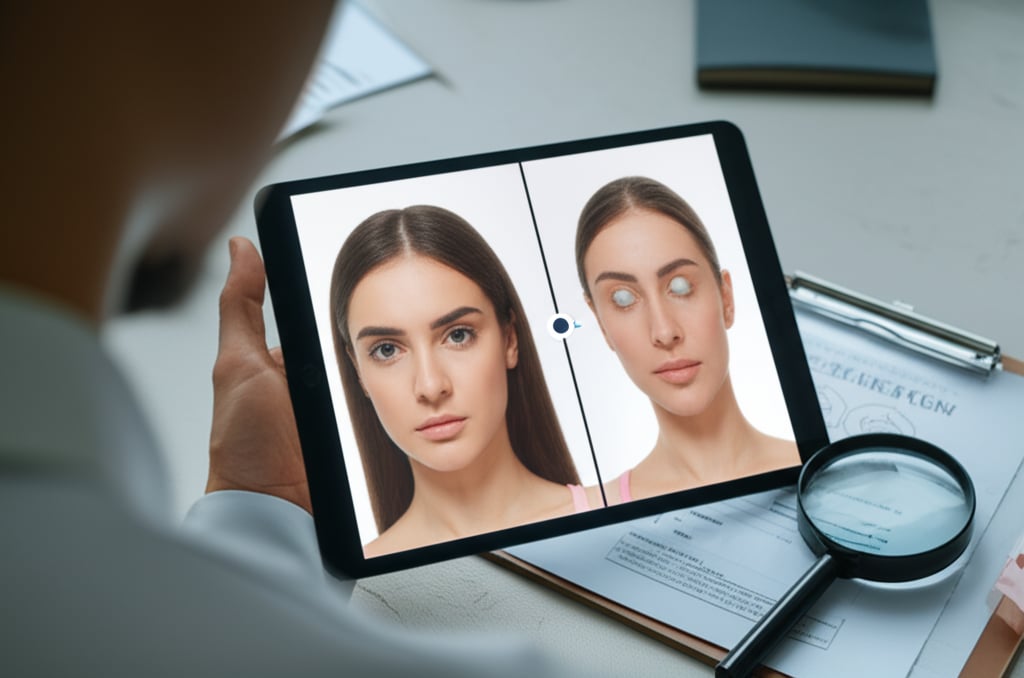
A surgeon's online gallery is a direct reflection of their technical skill, consistency, and artistic style. Critically analyzing a portfolio helps you verify their capabilities and determine if their aesthetic signature aligns with your personal goals.
Examining a surgeon's past results is a fundamental step in verifying their expertise (Docfinderkorea 2024). To do this effectively, you need to look beyond the initial impression and scrutinize the details. A high-quality gallery demonstrates transparency and a commitment to authentic results.
Here is a step-by-step guide to analyzing before-and-after photos:
- Verify Consistency: Look for photos taken with the same lighting, camera angle, background, and patient expression. Drastic differences can distort the outcome.
- Seek Variety: A trustworthy surgeon will showcase a wide range of patient cases, not just one or two "perfect" results. This demonstrates their ability to handle different anatomies.
- Identify Red Flags: Be wary of low-resolution images, obvious digital filters, or 'after' photos where the patient is wearing heavy makeup. These can obscure incision lines, swelling, or asymmetries.
- Evaluate the Aesthetic: Pay close attention to the surgeon's style. Do their results look natural and harmonious, or are they more dramatic? Ensure their typical outcome matches the look you envision.
- Request Specific Examples: During your consultation, ask to see photos of patients who had similar starting features and desired goals to your own.
By learning to read these visual r
ends with a critical eye, you empower yourself to choose a surgeon whose skill and artistic vision truly match your expectations.
Your Most Important Meeting: Key Questions for Your Consultation
Your consultation is the most critical interview you will conduct in your surgical journey. The quality of your questions will directly influence your outcome and peace of mind.
This is your best opportunity to gauge a surgeon’s expertise, understand their proposed surgical plan, and verify the clinic’s safety protocols. A productive consultation is driven by the patient asking specific, probing questions. It transforms you from a passive listener into an active, informed partner in your own care. Asking who will perform the operation is a vital step to avoid the dangerous practice of "ghost surgery," where an undisclosed surgeon takes over (Docfinderkorea 2024).

To ensure you cover all essential areas, use the following checklist during your discussion:
- The Surgical Team: "Who, specifically, will be performing my surgery from the first incision to the last suture? Who is my anesthesiologist, and what are their credentials?"
- Risks and Safety: "What are the most common risks associated with this procedure for someone with my health profile? What protocols and equipment do you have in place to handle emergencies?"
- Surgical Plan and Technology: "Which surgical technique do you recommend for me and why? Do you use technology like 3D virtual simulation to help visualize the expected results?"
- Recovery and Aftercare: "Can you describe the full recovery process, including the typical timeline? What post-operative care, such as deswelling treatments, is included in the price?"
- Transparent Costs: "Could you please provide a detailed, itemized quote that covers the surgeon's fee, anesthesia, facility costs, post-op care, and all taxes to avoid hidden charges?"
Asking these direct questions empowers you to verify a surgeon's expertise and a clinic's commitment to your safety and satisfaction.
Warning Signs: Red Flags to Avoid When Choosing a Clinic

While the promise of a successful procedure is exciting, it is important to approach your search with a critical eye. Recognizing warning signs is your first line of defense against unsafe practices and unsatisfactory results. These red flags may indicate that a clinic does not prioritize patient safety, transparency, or professional standards.
Recognizing these issues is essential for self-advocacy. Concerns about unqualified practitioners, such as the practice of ghost surgerywhere a substitute doctor performs the operation, remain a valid concern for patients (Docfinderkorea 2024). A reputable clinic will always be transparent and professional. Pay close attention to the following warning signs during your research and consultations.
- Aggressive Sales and Pressure Tactics: Be cautious if a clinic uses "limited-time offers" to rush your decision or pressures you to pay a deposit on the spot. Your choice should be made with careful consideration.
- Vague Answers on Credentials: If a clinic is evasive about the surgeon’s board certifications or cannot confirm the presence of a full-time, board-certified anesthesiologist, this is a major safety concern.
- Unrealistically Low Prices: Prices significantly below the market average often indicate compromises in surgeon experience, technology, post-operative care, or safety protocols.
- Poor Communication and Disorganization: A professional clinic should be organized, responsive, and attentive. If your coordinator seems rushed or communication is consistently chaotic, it reflects poorly on the clinic's standards.
Trust your intuition; if a clinic feels unprofessional or dismissive of your concerns, it is best to continue your search elsewhere.
Making Your Final Choice: A Confident Path Forward
You have diligently researched and consulted; now, the moment to make your final choice is here. This decision synthesizes objective data with your personal comfort. It is about selecting a surgeon and clinic that align with your aesthetic goals and safety expectations, ensuring a positive journey. Medical tourism experts emphasize that trusting your instincts is paramount in this crucial selection process (Docfinderkorea 2024).
- Review Your Research: Compare shortlisted clinics based on credentials, safety protocols, and patient reviews.
- Reflect on Consultations: Choose the surgeon who listened attentively, answered your questions thoroughly, and made you feel comfortable.
- Trust Your Instincts: If anything feels off about a clinic or surgeon, it is wise to pause and explore other options.
- Prioritize Informed Decisions: Taking your time ensures a safer and more satisfying experience.
Your final decision should be a balanced combination of objective research, verified credentials, and a strong sense of trust and rapport with your chosen surgeon.
Navigating the esteemed landscape of Korean plastic surgery as an international patient requires diligence and informed decision-making. By prioritizing safety and thorough research, you can confidently pursue your aesthetic goals.
Here are your key takeaways:
- Verify Credentials and Safety: Always confirm your surgeon is board-certified by a recognized body like the Korean Society of Plastic and Reconstructive Surgeons (KSPRS) and that a dedicated, board-certified anesthesiologist is on staff for your procedure. Your safety is paramount.
- Conduct In-depth Research: Move beyond superficial reviews. Critically analyze a wide range of unedited before-and-after photos, investigate clinic reputations, and choose facilities that offer robust support for international patients, including professional translation and comprehensive post-operative care.
- Prepare for Your Consultation: Arm yourself with specific questions about your surgeon's experience, procedure details, safety protocols, and aftercare. Clinics using high-pressure sales tactics, offering suspiciously low prices, or being unclear about who will perform the surgery should raise immediate red flags.
While Korea offers unparalleled expertise and innovation in aesthetic medicine, the onus is on you to ensure a safe and satisfying experience. With the knowledge provided in this guide, you are now well-equipped to begin your journey with confidence and clarity, making choices that align with your well-being and desired outcomes. For personalized guidance, platforms like Face On Korea can help connect you with vetted clinics that meet these high standards.
Tags
Related Articles

How to Choose the Right Plastic Surgeon in Korea: A Guide for International Patients

Online Consult Savings: The Shocking Truth About Korean Plastic Surgery