
Korean Plastic Surgery: Debunking 7 Essential Myths
Read about Korean Plastic Surgery: Debunking 7 Essential Myths on faceon

Individuals worldwide are increasingly drawn to Korean aesthetic surgery, captivated by its celebrated expertise and cutting-edge methodologies. Yet, a significant number of prospective international patients navigate this landscape burdened by entrenched misconceptions, often stumbling into unforeseen difficulties. Analytical data from the industry consistently reveals that widespread misunderstandings concerning post-operative healing, the true financial investment, and the extent of practitioner transparency significantly impede well-informed decision-making. This extensive resource aims to systematically dismantle the most tenacious falsehoods encircling overseas cosmetic procedures in Korea, empowering you with precise, evidence-based insights for a journey that is both safer and more predictable.
Myth 1: Recovery is Instant and Painless

Among the most pervasive illusions surrounding cosmetic procedures, especially those undertaken abroad, is the belief that the recovery period will be swift, straightforward, and largely free of discomfort. However, a deeper dive into countless online testimonials and shared experiences from individuals who have undergone a spectrum of procedures paints a starkly different picture. Many recount an arduous journey marked by prolonged physical discomfort, considerable pain, and a profound emotional toll that can linger for weeks, or even many months, far exceeding the initial, often understated, timelines. The act of undergoing surgery represents a profound physical assault on the body, and its subsequent healing cascade is an incredibly demanding, energy-intensive biological process. For instance, a sophisticated deep plane facelift, a procedure renowned for its transformative potential, typically involves at least a full month of significant swelling, bruising, and even temporary emotional disorientation, with the true, refined aesthetic outcomes only beginning to emerge and settle after several months have passed. Similarly, patients who have undergone breast augmentation or reduction procedures frequently report persistent aching or sharp pain many weeks into their recovery, directly clashing with the excessively optimistic narratives sometimes presented pre-operatively. The path to complete healing is not a fleeting sprint, but rather a demanding endurance race, calling for an abundance of patience, unwavering resilience, and careful management of expectations. It's a journey through fog and discomfort before the clear vista of results appears.
Key Takeaway: Always mentally prepare for a recovery phase that will be more arduous, protracted, and complex than initial projections suggest. Brace yourself for both substantial physical discomfort and the likelihood of emotional fluctuations, which are a natural part of the healing process.
Myth 2: All Information is Provided Upfront
A recurring theme echoing across countless online discussion boards and patient feedback platforms underscores a critical deficiency in pre-operative dialogue: essential particulars regarding comprehensive post-operative care, realistic recovery milestones, and the full spectrum of potential complications are often only unveiled after the surgery has taken place, or are convolutedly embedded within voluminous disclaimers that patients, overwhelmed by excitement or anxiety, may not fully internalize. This regrettable dynamic can be likened to acquiring a highly intricate piece of machinery without access to its comprehensive operational manual until after the purchase is finalized. For illustration, a patient might initially be assured they can resume their regular daily routine within a remarkably short period, only to find themselves handed a completely revised, significantly more restrictive set of directives immediately upon emerging from the operating room. Alarmingly, some individuals have also recounted experiences of feeling dismissed, minimized, or even "gaslighted" by medical personnel when attempting to voice legitimate concerns about unexpected or persistent pain or emerging complications post-surgery. This pattern points to a concerning deficit in empathetic and genuinely transparent follow-up care. It is therefore absolutely imperative for prospective patients to adopt a proactive stance, meticulously preparing and posing a detailed inventory of questions, and unequivocally insisting upon clear, unambiguous written instructions that meticulously delineate every facet of recovery, including potential adverse outcomes, well in advance of committing to any procedure. The absence of such clarity can turn the recovery roadmap into a bewildering maze.
Key Takeaway: Never assume that all vital, decision-altering information will be voluntarily offered. Meticulously compile a comprehensive list of questions and demand explicit, written responses concerning every dimension of the planned procedure, the expected recovery trajectory, and any foreseeable risks.
Myth 3: Overseas Procedures are Always Cheaper
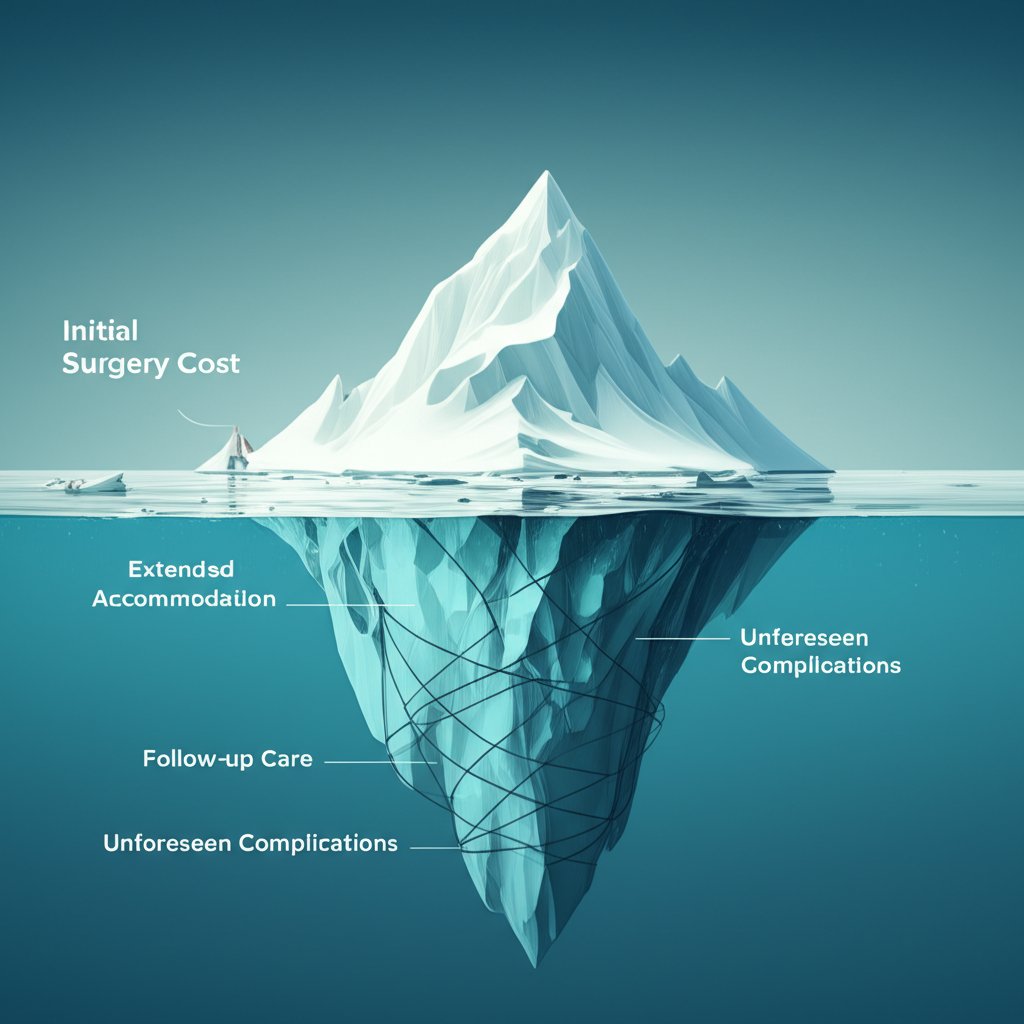
The widespread notion that Korean plastic surgery inherently offers a universally lower cost than comparable procedures performed in other countries, without any corresponding compromises, stands as a deeply ingrained misconception. While it is true that the initial quoted fees for certain procedures can indeed appear highly competitive, the underlying assumption of automatic, uncomplicated savings devoid of any ancillary expenses is frequently a misleading illusion. Beyond the fundamental surgeon's fee and facility charges, discerning prospective patients must meticulously account for a broad spectrum of supplementary expenditures that collectively form the true financial commitment. These often-overlooked costs can encompass significantly extended accommodation expenses, particularly if recovery extends beyond initial estimates or necessitates specialized housing; charges for essential follow-up consultations and highly specialized post-operative care services, such as therapeutic lymphatic massages, scar treatments, or even hyperbaric oxygen therapy sessions; and, crucially, a dedicated reserve for managing any unforeseen complications, which might necessitate additional medical interventions or prolonged stays. Moreover, it is not uncommon for certain clinics, particularly those heavily marketing to an international clientele, to operate with a distinct, sometimes elevated, pricing structure specifically tailored for foreign patients. Therefore, making a decision based solely on the lowest initial price quote, without a holistic and exhaustive understanding of the complete financial outlay, can lead to significant budgetary shocks and, more critically, potentially compromise the safety of the procedure or the quality of the aesthetic outcome. It's akin to only seeing the tip of an iceberg while the vast majority of its mass remains hidden beneath the surface.
Key Takeaway: Always insist upon receiving a meticulously itemized quote that comprehensively includes every conceivable cost, ranging from the surgical intervention itself to all aspects of aftercare, necessary medications, and accommodation. Additionally, meticulously factor in fluctuating currency exchange rates and the potential for travel disruptions or unexpected re-booking fees.
Myth 4: Big-Name Clinics Guarantee the Best Outcomes
A common belief holds that simply choosing a large, extensively advertised, and seemingly prestigious clinic in Korea automatically ensures superior aesthetic results and an impeccable safety record. However, this perception can be a dangerous oversimplification. The overarching reputation or brand recognition of a sprawling clinic does not, in fact, always translate directly to or guarantee the individual skill level, specific specialized expertise, or consistent quality of every single surgeon operating under its banner. Online forums and patient communities are replete with individuals grappling with the very question of how to genuinely identify the most competent and suitable surgeon within these large institutions. A grand facade can sometimes obscure varying levels of individual talent. It's crucial to understand that even within renowned clinics, there can be junior surgeons, less experienced practitioners, or even the concerning phenomenon of "ghost doctors" – where a highly reputable surgeon is marketed for a procedure, but a different, less qualified surgeon actually performs the surgery. Relying solely on the clinic's marketing prowess, impressive building, or celebrity endorsements can distract from the essential due diligence required to vet the specific medical professional who will be operating on you. True excellence lies not in the clinic's name, but in the hands and mind of the individual surgeon.
Key Takeaway: Look beyond superficial branding and massive marketing campaigns. Prioritize researching the individual surgeon's specific qualifications, board certifications, specialized experience in the desired procedure, and independently verified patient reviews or outcomes attributed to that surgeon, rather than merely the clinic as a whole. Your health and aesthetic outcome rest on individual expertise.
Myth 5: Language Barriers Won’t Affect Your Experience
While Korea’s cosmetic surgery industry is increasingly catering to international clients, assuming that every clinic will provide seamless, native-level communication in your language can be a dangerous miscalculation. Even when clinics advertise multilingual coordinators, these staff members may only be present during initial consultations, with limited availability during crucial post-operative check-ins or in moments of medical urgency. In some cases, the coordinator’s medical knowledge may be minimal, meaning critical nuances in your symptoms, discomfort levels, or concerns can be lost in translation. This gap in communication becomes even more pronounced when discussing potential complications, where clarity is paramount. Without precise mutual understanding, subtle but serious issues could be overlooked or misinterpreted, leading to delays in treatment or inappropriate aftercare measures. Patients have reported feeling isolated, confused, or pressured to accept vague reassurances in place of direct, transparent explanations. It’s worth remembering that effective medical communication is not just about translating words — it’s about capturing tone, urgency, and medical specificity.
Key Takeaway: Confirm in advance who will handle translations at every stage — from consultation to post-op care — and ensure they have medical training or at least a clear understanding of your procedure. When possible, bring an independent interpreter you trust for critical appointments.
Myth 6: Revision Surgery is Rarely Needed
A significant number of first-time patients travel abroad under the belief that their procedure will almost certainly be a one-time event, producing results that will remain stable for years to come. In reality, revision surgeries are far more common than marketing materials suggest, even when the original operation is technically successful. Aesthetic preferences can shift, scar tissue can form unpredictably, implants can shift position, and certain facial or body modifications may require adjustments as the body heals and ages. In fact, the recovery phase itself can reveal unexpected asymmetries or texture changes that were not visible immediately post-op. Revision rates for some procedures — such as rhinoplasty — can be as high as 15–20%, depending on the complexity of the initial surgery and the patient’s healing response. The challenge for overseas patients is that arranging revisions often means returning to the same surgeon, requiring additional travel, accommodation, and recovery time — or trusting a new surgeon to work with existing surgical alterations, which can be even more technically demanding.
Key Takeaway: Mentally and financially prepare for the possibility of a revision surgery, even if you’re confident in your choice of clinic and surgeon. A well-informed plan includes budgeting for potential follow-up trips or local corrections.
Myth 7: Korean Beauty Standards Match Everyone’s Preferences
Korea’s cosmetic surgery industry is undeniably shaped by its own cultural beauty ideals — including V-line jaw contours, double eyelids, slim facial profiles, and small, high-bridged noses. Many clinics, particularly those serving a domestic clientele, are deeply accustomed to delivering results that align with these standards. For international patients, this can mean that even with clear instructions, your final outcome may lean toward the aesthetic norms preferred in Korea rather than your personal or cultural ideal. Some patients report feeling that their surgeon subtly guided them toward changes more aligned with Korean trends than their own stated goals, especially if their natural features strongly differ from the “template” most frequently worked on in the clinic. While this influence is rarely malicious, it underscores the importance of ensuring your surgeon truly understands — and respects — your desired look, even if it diverges from local mainstream beauty ideals.
Key Takeaway: Bring multiple, clear visual references of the look you want, ideally featuring people who share similar ethnic and structural features to your own. Discuss explicitly how your preferences differ from local trends, and ensure your surgeon is comfortable delivering that result.
Tags
Related Articles
Korean Facelift Recovery: Your Essential Guide to Healing

How to Choose the Right Plastic Surgeon in Korea: A Guide for International Patients